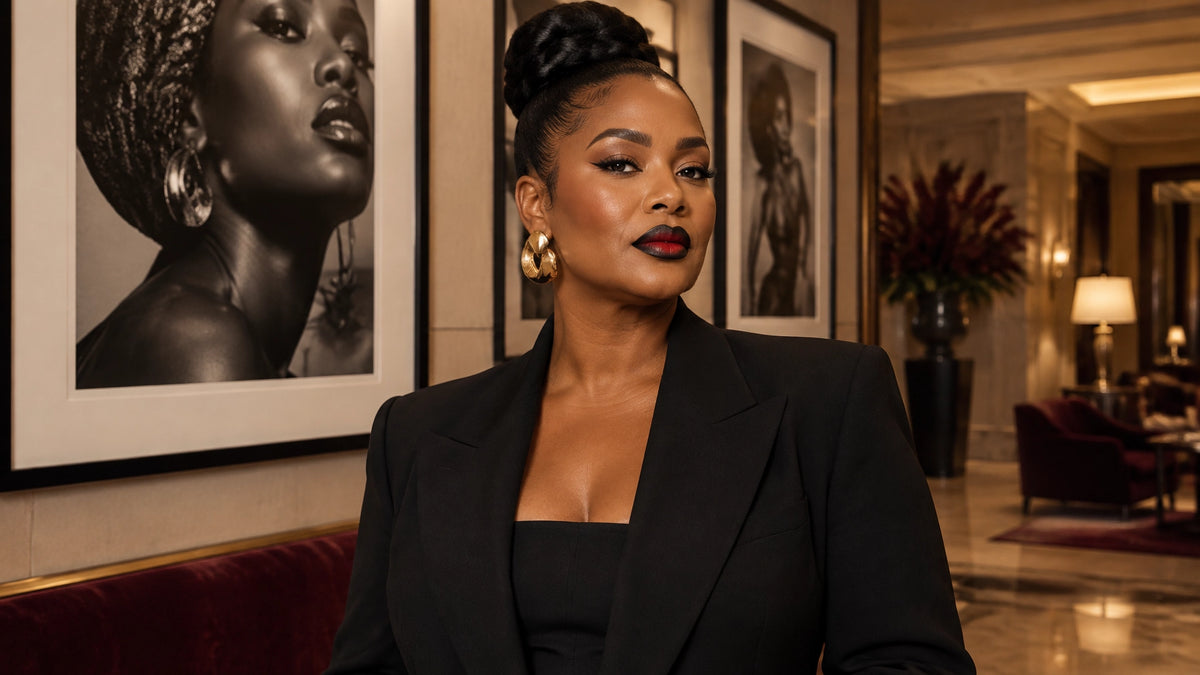
Nancy Twine built Briogeo into one of the most recognized haircare brands in the country. This month, she launched again.
Her new brand, Soulstice, is a moisture-focused haircare line built around accessible hydration, thoughtful formulas, and the idea that haircare can feel like both performance and self-care. In her recent Harper’s Bazaar interview, Twine describes Soulstice as a brand shaped by where she is today as a founder and a consumer.
Most of the coverage will focus on the products. That makes sense. Soulstice is a new haircare brand launch in 2026, and people want to know what is in the collection, how it works, and where to buy it.
But I am more interested in the second act.
Starting Over Is Its Own Skill
Starting a company and starting again are not the same experience.
The first company teaches you what you did not know. You learn how to develop an idea, find customers, make mistakes in public, manage pressure, and keep going when the plan changes.
The second company is built with a different kind of knowledge.
You know more about your strengths. You know what drains you. You know which opportunities are worth the cost and which ones only look good from the outside. You understand that the right partner matters as much as the right product. You have a clearer sense of what you will keep, what you will refuse, and who you want beside you.
That is what I see in Nancy Twine’s Soulstice story.
She is not simply repeating Briogeo. She is using everything Briogeo taught her while making different decisions on purpose. Soulstice is more focused at launch, hydration-forward, and positioned at a more accessible price point. It is launching direct to consumer, and Twine is self-funding the business rather than rushing to scale.
Those are not small details. They show a founder returning with perspective.
A second act is not an attempt to prove that the first act never happened. It is what happens when experience becomes part of the business model.

The Part Of My Story I Understand Personally
I know something about building again because I have had to do it.
In 2012, I launched my first line, Perfect Face by Sheriff. The brand gained real traction. There was excitement around it, customers believed in it, and I believed in what it could become.
Then I ran into a trademark fight I could not win.
The business ended. That sentence is simple, but living through it was not.
Around the same time, I was recovering from a serious car accident. It was the hardest stretch of my life. I was dealing with the emotional weight of losing something I had built while also trying to recover physically and find my way back to myself.
There is a version of the founder story that skips over those years. It jumps from the first idea to the successful relaunch, as if the space between them was empty.
It was not empty.
It was full of grief, lessons, bills, questions, recovery, and long stretches when I did not know what would come next. It was also full of preparation I could not recognize at the time.
Eight years later, in 2020, during the pandemic, I launched Ashunta Beauty. I started with the Day & Night magnetic lash set, a product rooted in the kind of practical innovation I wanted to bring to beauty.
Nothing from the first round was wasted. Not the momentum. Not the customers. Not the hard conversations. Not even the losses.
Especially not the losses.
A Restart Is Not A Failure
I want to say this clearly for anyone who needs to hear it:
A restart is not a failure. It is a revision.
Nobody reads a second draft and calls it a defeat.
They understand that the writer saw the story more clearly, made changes, removed what did not belong, and strengthened what did. Business can work the same way. So can a career, a creative practice, a relationship with your own ambition, or the way you imagine your future.
When people talk about second-act founders, they sometimes make the story sound glamorous. They focus on the new launch, the press coverage, the beautiful campaign, and the announcement.
Those things matter. But they are not the whole story.
The real achievement is having the courage to return after your confidence has been tested. It is being willing to become a student again after people have already called you successful. It is making decisions from wisdom instead of urgency.
That is what makes Nancy Twine’s return worth studying.
The Wider Wave Of Black Women Building Again
Twine’s launch is part of a wider movement among Black women entrepreneurs in beauty who are building with greater reach, sharper strategy, and a deeper understanding of what sustainable growth requires.
Sukiana Chancy is taking Topicals into a broader global chapter, with expansion plans that include additional markets across Europe, Africa, and the Middle East. Nancy Twine is starting over with Soulstice, bringing everything she learned from Briogeo into a more focused and accessible haircare model. And Yaneek Proctor, founder of Yani’s Aesthetic, founded her brand in 2020 and built a full professional brush and kit line now stocked at the Black Beauty Collective flagship in Chicago.
These stories are different, but they share a central truth: growth does not always look like a straight line.
Sometimes it looks like changing roles. Sometimes it looks like entering a new category. Sometimes it looks like returning to the work after a long pause. Sometimes it looks like building the same kind of business with a completely different level of intention.
For Black women in beauty, these second acts also create new examples of what leadership can look like. We are not only launching products. We are building companies, creating jobs, developing systems, mentoring other founders, and deciding what kind of legacy we want to leave behind.

Building With More Intention
At Ashunta Beauty, I have built around clean, vegan, cruelty-free, skin-care-infused performance for every complexion. That point of view came from years of seeing what beauty customers needed and what the industry was still missing.
The brand I have today is connected to the woman I was in 2012, but it is not limited by that version of me.
That distinction matters.
You can honor your original vision without recreating every part of your original business. You can keep your purpose while changing your process. You can use your past as evidence of what you know rather than as a reason to stay attached to what no longer works.
That is the freedom of a second act.
It allows you to ask better questions:
- What did the first chapter teach me?
- What am I no longer willing to tolerate?
- Which parts of the old vision still feel true?
- Who has earned a place in the next chapter?
- What would I build if I stopped trying to prove that I deserved to be here?
The answers may not arrive all at once. They did not for me. But asking the questions changes the way you move.

Key Takeaways For Anyone Rebuilding
Nancy Twine’s Soulstice launch is not only a story about a new haircare line. It is a lesson in returning with clarity.
The most important takeaways are simple:
- Starting again requires a different kind of strength than starting. Experience changes the choices you make.
- Your losses can become part of your expertise. What hurt you may also teach you how to build more wisely.
- A second act does not erase the first. It revises, refines, and carries the useful parts forward.
- You are allowed to change the model. A new chapter does not have to follow the old blueprint.
- It is not too late. There is no expiration date on rebuilding something meaningful.
If you are rebuilding a business, a career, a creative dream, or simply your confidence, let this be your sign: you are not behind.
You are bringing knowledge to the work that you did not have before.
That is not starting from nothing.
That is starting again with yourself.
Explore the next chapter of Ashunta Beauty, and remember that your second draft may be the one that finally sounds like you.