Table of Contents
- What Is Vegan Tube Mascara and How Does Tubing Technology Work?
- How to Remove Tubing Mascara Without Damaging Lashes
- Tubing vs Waterproof Mascara: Which Lasts Longer and Removes Easier?
- Best Cruelty-Free Mascara for Sensitive Eyes: Ingredients to Look For and Avoid
- Drugstore vs Luxury Vegan Tube Mascara: What Are You Paying For?
- Sustainability Beyond Vegan: Eco-Friendly Packaging and Ethical Claims
- Frequently Asked Questions
Last Updated: September 22, 2026
What Is Vegan Tube Mascara and How Does Tubing Technology Work?
Vegan tube mascara is a polymer-based formula that wraps each lash in flexible tubes instead of painting pigment onto the surface. The result is a water-resistant, smudge-proof finish that survives sweat and humidity, then slides off with warm water and gentle pressure. At Ashunta Sheriff Beauty, we build our formulas around this principle.
Tubing technology isn't new, but vegan versions use plant-derived polymers that hold a curl all day yet remove without tugging.
The Polymer-Based Formula Behind the Tubes
The tubes form when tubular polymers bind to your lashes as the mascara dries, wrapping each lash in a flexible sheath that resists oil, water, and friction. Unlike wax-based mascaras that melt and transfer, they hold their shape until warm water hits them.
A common mistake is assuming all tubing formulas perform the same. The polymer blend determines how well the tubes grip, how much volume you get, and whether removal is a five-second rinse or a frustrating scrub. Look for acrylates copolymer or a plant-derived equivalent near the top of the ingredient list.
Why Vegan Formulas Matter for Lash Health and Ethics
Vegan means no animal-derived ingredients: no beeswax, carmine, or lanolin. For many consumers that's an ethical line; for others, it's about what touches their eyes.
Lanolin, a common mascara ingredient derived from sheep wool, can trigger irritation in people with sensitive skin. Carmine, a red pigment made from crushed insects, is a known allergen for some. Plant-based alternatives like candelilla wax and rice bran wax deliver similar texture without those risks. The U.S. Food and Drug Administration's cosmetics labeling guidance outlines how "vegan" claims are regulated, and it's worth reading before you trust any label.
How to Remove Tubing Mascara Without Damaging Lashes
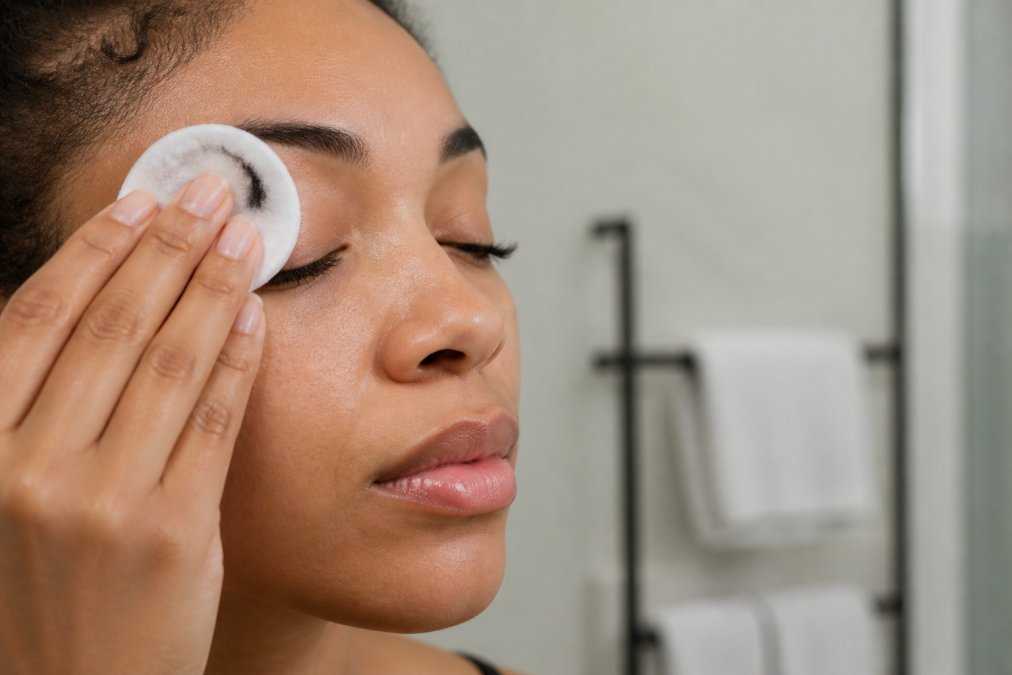
Removal is where tubing mascara wins or fails. Done right, it takes under 30 seconds and leaves zero residue; done wrong, you're picking at your lash line and losing lashes. The key is warm water, not hot, and pressure, not rubbing.
Step-by-Step Warm Water Removal
Follow this sequence and the tubes slide off in one piece:
- Soak a cotton pad or washcloth in warm water, not hot
- Press it against your closed eye for 10-15 seconds
- Gently slide the pad downward along your lashes
- Repeat if needed, then rinse
- Pat dry and apply a lash serum or conditioning oil if you use one
The tubes should come off as small, dark fibers on the pad. Smears mean the water wasn't warm enough or you didn't hold long enough.
Troubleshooting Stubborn Tubes and Raccoon Eyes
Raccoon eyes with tubing mascara usually mean you slept in it or layered it over a non-tubing formula, both create a mess warm water alone won't fix.
For stubborn tubes, start with warm water. If residue remains, apply micellar water on a cotton pad and press for another 10 seconds, the combination breaks down both the tubes and any underlying product.
Diagnosing the Five Most Common Removal Failures
Most guides stop at "use warm water," which fails the moment something goes wrong. Here's what each common failure means and how to fix it.
1. Tubes come off as smears, not fibers. The formula was compromised before removal, usually by layering tubing mascara over a wax-based primer or waterproof mascara, whose wax base melts and drags the polymer tubes into a paste. Remove the underlying product first with oil-free micellar water, then re-press with warm water. If you only wear tubing mascara and still see smears, the polymer load is too low; switch products.
2. Tubes release unevenly. The water cooled mid-removal, below roughly lukewarm the polymer stops softening. Re-soak the pad and work one eye at a time.
3. Lash pulling or stinging at the root. This is a pressure problem: pressing straight down compresses the lash root against the eyelid.
What Removal Should Feel Like When It Is Working
A correctly formulated vegan tubing mascara should release with no more pressure than wiping away a tear. If you're pressing hard enough to indent the eyelid, the formula or technique is wrong. The tubes should look like tiny comma-shaped fibers on the pad, proof the polymer sheath held together through the day.
Tubing vs Waterproof Mascara: Which Lasts Longer and Removes Easier?
Tubing mascara lasts longer in humid conditions and removes far easier than waterproof. Waterproof formulas rely on solvents and waxes that require oil-based removers, which strip moisture from lashes and irritate sensitive eyes. Tubing formulas hold up against sweat and humidity, then release with warm water alone.
| Feature | Tubing Mascara | Waterproof Mascara |
|---|---|---|
| Removal method | Warm water | Oil-based remover |
| Smudge resistance | High | High |
| Flake resistance | High | Moderate |
| Lash damage risk | Low | Moderate to high |
| Sensitive eye friendly | Often | Rarely |
| Contact lens safe | Usually | Sometimes |
Best Cruelty-Free Mascara for Sensitive Eyes: Ingredients to Look For and Avoid
The best cruelty-free mascara for sensitive eyes skips synthetic fragrance, parabens, phthalates, and sulfates, relying instead on plant-based waxes, conditioning agents, and ophthalmologist-tested pigments. If your eyes water, itch, or turn red after applying mascara, the formula is the problem, not your technique.
Ingredients worth seeking out:
- Candelilla wax or rice bran wax for texture
- Panthenol and vitamin E for lash conditioning
- Iron oxides for triple-black pigment without irritation
- Plant-derived polymers for the tube coating
Safe Ingredients for Contact Lens Wearers
Contact lens wearers need formulas that won't flake into the eye or film the lens. Tubing mascara is a strong fit because the tubes stay intact until removal. Look for ophthalmologist-tested and dermatologist-tested claims, and avoid fibers, which can migrate under a lens.
Red Flags: Synthetic Fragrance, Parabens, and Phthalates
Synthetic fragrance is the most common culprit behind mascara irritation and is unnecessary in an eye product. Parabens and phthalates are preservatives and plasticizers some consumers avoid, and sulfates create foam but can dry the delicate skin around the eyes.
Why Vegan Tubing Polymers Are Gentler Than Traditional Waxes
This is why vegan tubing mascara tends to work better for reactive eyes than a conventional "sensitive" mascara: the two formulas fail in completely different ways.
Reading a Vegan Tubing Ingredient List Like a Formulator
Once you understand the mechanism, the ingredient list becomes readable. Here's what to look for and what each item does.
A Quick Sensitivity Test Before You Commit
Even a well-formulated vegan tubing mascara can disagree with an individual eye, since sensitivity isn't fully predictable from an ingredient list. Before committing to a full tube, apply one coat to one eye and wear it a full day. Watch for watering within the first hour, itching at the lash line by mid-day, and redness or puffiness at removal.
Drugstore vs Luxury Vegan Tube Mascara: What Are You Paying For?
The gap between drugstore and luxury vegan tube mascara comes down to three things: polymer quality, brush design, and testing. Drugstore options often use simpler polymer blends that work for daily wear but break down faster in heat, while luxury formulas invest in refined polymers and brushes that separate lashes more precisely.
Sustainability Beyond Vegan: Eco-Friendly Packaging and Ethical Claims
Vegan is a starting point, not the finish line. A product can be vegan and still ship in non-recyclable packaging or come from a questionable supply chain. True sustainability means looking at the whole picture: what's in the tube, what the tube is made of, and who made it.
Frequently Asked Questions
What is the downside of tubing mascara?
Tubing mascara can be less buildable than traditional volumizing formulas, so you may need extra coats for dramatic volume. Some users find the tubes flake if rubbed vigorously before removal, and warm water is required to take it off, which can be inconvenient if you prefer oil-based cleansers. However, for most people, the smudge-proof, flake-free wear and easy removal outweigh these minor trade-offs.
Is tubing mascara easier to remove than waterproof mascara?
Yes, tubing mascara is generally easier to remove. Waterproof mascara requires oil-based removers and rubbing, which can tug at lashes. Tubing mascara slides off with warm water and gentle pressure, as the polymer tubes soften and release from the lashes. This makes it a better choice for sensitive eyes and contact lens wearers who want to avoid harsh removers.
Does vegan tubing mascara provide the same volume as non-vegan options?
Vegan tubing mascara can deliver comparable volume, especially with buildable formulas that use plant-based waxes and polymers. The key is application: wiggle the wand at the base and apply multiple thin coats. Some vegan options may feel lighter, but they still provide clump-free definition and a lash extension effect.
Are all tubing mascaras considered cruelty-free?
No, not all tubing mascaras are cruelty-free. Some brands still test on animals or use animal-derived ingredients like beeswax or carmine. To ensure a product is truly cruelty-free, verify the ingredient list is free of animal byproducts. Vegan and cruelty-free are separate claims, so look for both on the label.