Table of Contents
- Why Sensitive Skin Needs a Different Kind of Foundation
- Makeup Ingredients to Avoid for Sensitive Skin
- How to Check for Cruelty-Free Certification
- Best Hypoallergenic Cruelty-Free Foundation: What to Look For
- How to Buy Cruelty-Free Foundation for Sensitive Skin Without Guessing
- Wear-Test: Sweat, Humidity, and Long Days
- Conclusion
- Frequently Asked Questions
Last Updated: September 23, 2026
Why Sensitive Skin Needs a Different Kind of Foundation
Finding a foundation that performs without triggering redness, stinging, or breakouts is the central challenge for reactive skin, and the formula matters more than the shade match. This guide from Ashunta Sheriff Beauty walks through how to buy cruelty free foundation for sensitive skin without wasting money on trial and error.

Makeup Ingredients to Avoid for Sensitive Skin
The fastest way to protect reactive skin is to eliminate known irritants before you shop. But a generic 'avoid fragrance and parabens' list won't help you read a real ingredient panel, because the same irritant family hides under many names. Here's the mechanism behind each culprit, plus how to spot it on a label.
The Big Four: Fragrance, Parabens, Phthalates, and Sulfates
Synthetic fragrance is the leading cause of contact irritation in cosmetics. 'Fragrance' and 'parfum' are trade-secret umbrella terms that can each stand in for dozens of undisclosed chemicals, including known sensitizers like cinnamal and limonene, so a reactive user can't isolate which one caused the flare. Fragrance-free formulas remove the entire category. Note the distinction: 'unscented' can still contain masking fragrance, while 'fragrance-free' should not.
A practical label-scanning checklist:
- No "fragrance," "parfum," or "aroma" in the ingredient list
- No parabens (methyl-, propyl-, butyl-, ethyl-)
- No phthalates or "dibutyl phthalate" / "diethyl phthalate"
- No sulfates (SLS, SLES)
- Fewer than 30 total ingredients where possible
- No drying alcohols (denatured alcohol, SD alcohol) in the first five ingredients
Ingredients That Actually Help Reactive Skin
Certain ingredients actively calm and support the skin barrier, the real goal for reactive skin. Hyaluronic acid is a humectant that draws water into the upper layers and plumps fine lines, so the formula doesn't settle into texture. Squalane is an emollient that mimics the skin's own sebum, softening and moisturizing without clogging pores, unlike heavier oils like coconut, which can be comedogenic. Hydrolyzed collagen supports elasticity and gives the skin a firmer look.
Vegan Polymers vs. Traditional Waxes: Why the Base Matters
Traditional long-wear foundations often rely on animal-derived or heavy waxes, beeswax, lanolin, carnauba, to bind pigment to skin. Lanolin is a well-documented sensitizer for many reactive users, and heavy waxes can occlude pores and trap heat, worsening redness over a long day.
How to Check for Cruelty-Free Certification
A cruelty-free label is only as trustworthy as the certification behind it. Any brand can print "cruelty-free" on a box, but verified programs require third-party audits and public commitments.
Logos, Leaping Bunny, and What They Actually Mean
Leaping Bunny is the most rigorous widely recognized certification for cruelty-free cosmetics. It requires a fixed cut-off date, verification of every supplier, and independent audits, a brand can't simply self-declare.
A quick verification method:
- Find the logo on the packaging or brand site
- Visit the certifying body's official directory
- Confirm the brand appears with a current listing
- Check that the specific product line is covered, not just the parent company
Best Hypoallergenic Cruelty-Free Foundation: What to Look For
The best hypoallergenic cruelty-free foundation combines three things: a short, fragrance-free ingredient list, verified cruelty-free status, and a wear claim you can actually test. Hypoallergenic is not a regulated term, so treat it as a starting point rather than a guarantee.
| Feature | Why It Matters for Sensitive Skin |
|---|---|
| Fragrance-free | Removes the most common irritation trigger |
| Paraben-free | Avoids preservatives some users react to |
| Vegan-friendly | Rules out animal-derived ingredients |
| Hyaluronic acid + squalane | Hydrates and supports the skin barrier |
| Sweat-proof, waterproof | Holds up through long, humid days |
How to Buy Cruelty-Free Foundation for Sensitive Skin Without Guessing
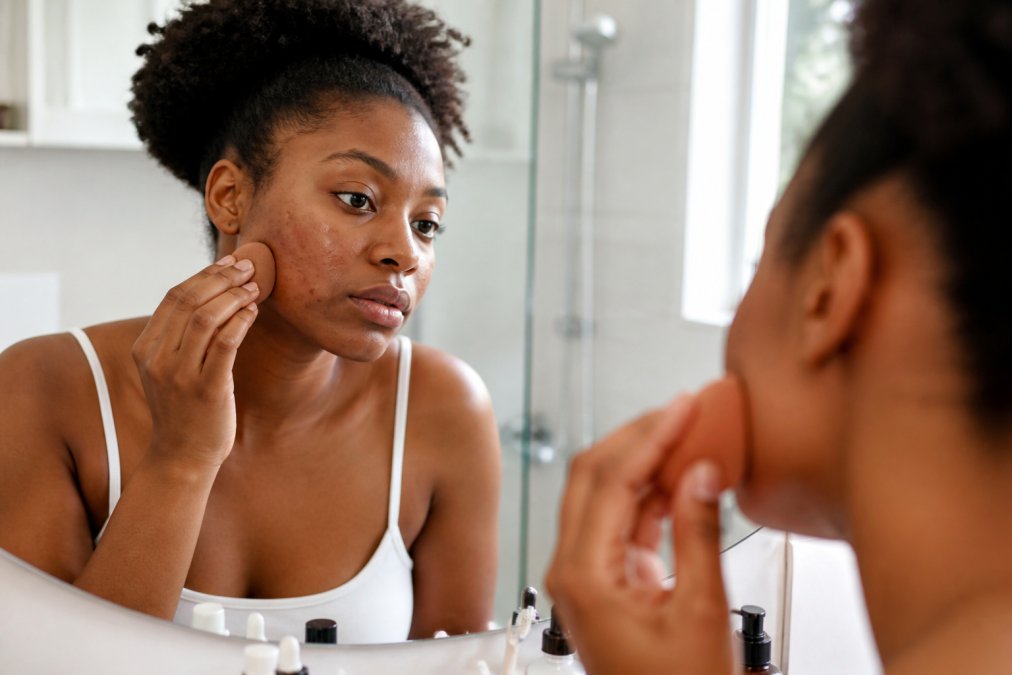
Buying without guessing means testing on your terms before you commit. Start with a patch test on your jawline, wear it for a full day, and only then decide on a full-size purchase.
A step-by-step testing routine:
Ashunta Sheriff Beauty BlurEFX™ →
- Patch test behind the ear or along the jaw for 24 hours
- Apply a thin layer and check for stinging within the first hour
- Wear it through a full workday to judge oxidation and wear
- Check for clogged pores after two or three consecutive days
- Commit to full size only after the formula passes all four checks
Shade Matching for Deeper Skin Tones
Undertone is the deciding factor, not just depth. Foundations that look ashy or orange usually have the wrong undertone, not the wrong shade number. Test along your jawline in natural daylight and let the formula sit for 20 minutes before judging, since many foundations oxidize as they set.
Wear-Test: Sweat, Humidity, and Long Days
Wear time is where sensitive-skin foundations often fall apart. A formula can feel gentle at application and still slide off by midday, pushing you to reapply and irritate your skin further. The fix is testing wear honestly and knowing how to remove it without stripping your barrier.
How to Run a Real Wear Test
Prioritize long-wearing, sweat-proof, and humidity-proof formulas. Water-based foundations that set to a soft-focus finish generally hold better than heavy creams and feel lighter on reactive skin, while a waterproof, breathable formula lets skin function as the pigment stays put.
Application Tips That Extend Wear on Reactive Skin
How you apply matters as much as what you apply. A few techniques that consistently help:
- Start with a barrier-supporting primer on the T-zone only. A silicone-based primer gives the polymer film something to grip, which reduces the need for a setting powder that can dry out reactive skin.
- Apply with a damp sponge, not a brush. A sponge presses product into the skin with less friction, which matters when redness is already present. Brushes can micro-exfoliate and trigger flushing.
- Build in thin layers. One heavy layer breaks down faster than two thin ones, and thin layers let you stop before you over-cover.
- Set only where you need it. Powder the T-zone and leave the cheeks bare if they're dry or reactive. Full-face powdering is the most common cause of midday flaking on sensitive skin.
Removal Troubleshooting: The Step Most Guides Skip
Removal is where sensitive-skin users do the most damage. Warm water alone rarely breaks a long-wear or waterproof film, so people scrub, and scrubbing causes the redness and irritation they were trying to avoid. If you still see tint on the cotton pad after removing foundation, the residue is what clogs pores overnight.
The reliable method is a two-step cleanse:
- Oil or balm cleanser first. Massage it onto dry skin for 30-60 seconds. The oil dissolves the polymer film and pigment without friction. Emulsify with a splash of water, then rinse.
- Gentle water-based cleanser second. This removes the oil residue and any remaining pigment. If your cotton pad comes away clean, you're done.
Sensitive Eyes and Contact Lens Compatibility
If you wear contacts, the eye area is the most likely place for a foundation to cause trouble. Fragrance and preservatives migrate, and a formula that's fine on your cheek can sting your eye within an hour. Look for ophthalmologist-tested formulas if your eyes are reactive, and apply foundation after inserting contacts to keep product off the lens. If your eyes water midday, that moisture breaks down foundation around the eyes and creates the smudged, raccoon look.
Conclusion
Sensitive skin makes foundation shopping harder, but the process is manageable once you know what to screen for: fragrance-free formulas, verified cruelty-free status, and a wear test you run yourself. Ashunta Sheriff Beauty builds its complexion range around those exact priorities, with paraben-free, vegan-friendly formulas that pair hyaluronic acid, collagen, and squalane with long-wearing, sweat-proof performance across 14 skin-like shades.
Frequently Asked Questions
What ingredients should sensitive skin avoid in foundation?
Sensitive skin reacts most often to synthetic fragrance, parabens, phthalates, and sulfates. These can trigger redness, itching, or breakouts even in small amounts. Look for formulas labeled fragrance-free rather than unscented, since unscented products sometimes contain masking fragrances. Also check for alcohol denat, which dries the skin barrier, and heavy silicones that trap sweat and bacteria. A cruelty-free foundation for sensitive skin should list its full ingredients so you can spot triggers before you buy.
How can I tell if a foundation is truly cruelty-free?
Look for third-party certification logos like Leaping Bunny or PETA's Beauty Without Bunnies. These programs audit brands and their suppliers, not just the final product. A brand claiming cruelty-free on its own label without certification may still test ingredients through suppliers in markets where animal testing is required by law. Check the brand's website for a certification page, and verify the certification is current. Vegan and cruelty-free are separate claims: vegan means no animal ingredients, cruelty-free means no animal testing.
Is mineral foundation better for sensitive skin?
Mineral foundations can be gentler because they often skip fragrance, preservatives, and oils that trigger reactions. However, not all mineral formulas are equal. Some contain bismuth oxychloride, which irritates certain skin types, or mica that can feel drying. The bigger factor is whether the formula is free of your specific triggers. A hypoallergenic cruelty-free foundation with mineral blurring technology, like silica and boron nitride, can smooth texture without clogging pores, which matters if you are prone to breakouts.
What is the difference between vegan and cruelty-free makeup?
Vegan means the formula contains no animal-derived ingredients such as beeswax, carmine, lanolin, or collagen from animals. Cruelty-free means no animals were tested on at any stage of production. A product can be vegan but still tested on animals, or cruelty-free but contain beeswax. If both matter to you, look for labels that state both, and check for third-party certification. Ashunta Sheriff Beauty's BlurEFX Foundation Duo is both paraben-free and cruelty-free, with a vegan-friendly formula.